
Why Live Music Hits Different — and It's Not Just Nostalgia
There's a specific reason live sound feels different from recorded music. It's more interesting than you'd think.
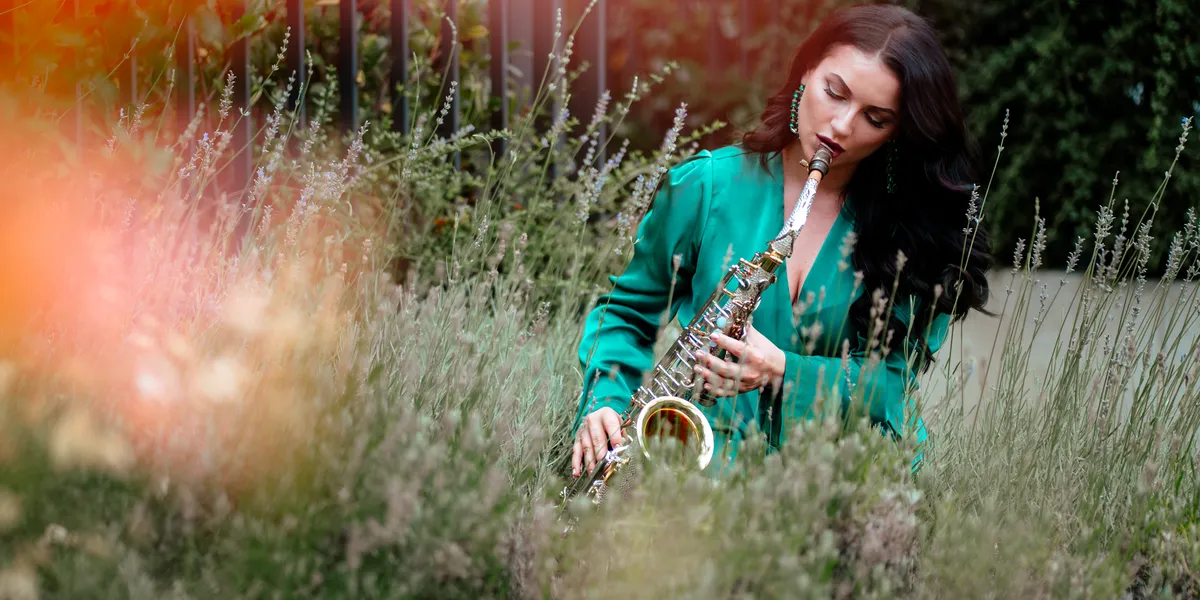
Ask anyone who’s been to an event where a live musician walked in mid-set. Something shifted. Conversations paused. People looked up. The room changed.
It happens consistently enough that it’s worth asking why.
Your brain knows the difference
Recorded music is finished. Every note is exactly where it was placed, every transition precisely timed. That’s its strength — and its ceiling.
Live sound operates on a different level. There are micro-variations in pitch, timing, and intensity that can’t be programmed. Your brain registers these as presence — not as “good music,” but as “there’s someone here.” That’s a fundamentally different signal.
Neuroscience backs this up: live music activates broader areas of the brain than recorded playback, including regions associated with emotion and social connection. It’s not a metaphor. It’s a measurably different experience.
Imperfection as a feature
Here’s the paradox: the imperfections in a live performance are exactly what make it compelling.
The breath before a saxophone phrase. The slight bend at the end of a note. The moment of tension before a resolution. None of this exists in a recording — and that’s precisely why recordings, however well-produced, never quite replicate the feeling of being in the room.
Audiences don’t consciously analyze this. They just feel it.
DJ vs. live musician — the wrong question
The choice isn’t between a DJ and a live musician. They do different things.
A DJ manages the arc of the evening — the energy, the transitions, the overall direction. A live instrument creates moments within that arc. Together, they’re more effective than either one alone.
The right question isn’t which is better. It’s which serves which moment in your event.
Where weddings and cocktail hours benefit most
Some formats extract more value from live music than others — and weddings and cocktail events are at the top of that list.
The reason is straightforward: these are moments when people are emotionally open. An outdoor ceremony, a welcome drink, a first dance — each carries its own emotional weight. Live music amplifies that weight in a way a playlist simply doesn’t.
For cocktail hours specifically, the balance matters. Music needs to hold the room without dominating it — present enough to be felt, subtle enough to let conversation happen. A live instrument in lounge or jazz mode does exactly that. A playlist does it less reliably, because it wasn’t designed for that specific room on that specific evening.
What people actually remember
Nobody remembers the playlist from a wedding. They remember the moment the music did something to them.
That’s the difference.
If you’re considering live music for an upcoming event, get in touch — happy to talk through what format would work best.